L. Jane Easdown, MD
A few years ago, the SEA Board of Director’s launched an outreach program to contact other anesthesiology societies to offer workshops and share resources and educational material. This outreach program is led by Dr. Deb Schwengel. One of the advantages of the outreach has been learning about the other societies and what they create and offer to members. The Society of Neurosurgical Anesthesia and Critical Care (SNACC) is one of the societies with a strong education focus. SEA members may benefit from familiarity with SNACC’s offerings, which can help both training programs individual trainees.
SNACC membership comprises neuroscientists, neurointensivists and neuroanesthesiologists. The society was founded in 2007 and has traditionally had a one-day meeting ahead of the ASA, which made it very difficult to SEA members to attend. SNACC had its first freestanding meeting in September 2019, which allowed for additional days of programming. For the first time, a group of SEA members could attend the full meeting! SNACC leadership was keen to work with SEA to provide new experiences for their membership. Through this relationship we have learned that SNACC has many educational resources for use for the general public.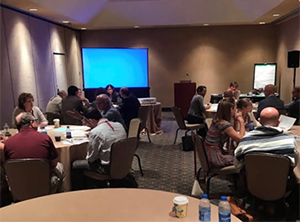
SEA/SNACC Workshop- SNACC invited SEA members to conduct a workshop for the September 2019 meeting, and from several topics offered they chose curriculum development. Deb Schwengel organized a workshop with Karen Souter, Shobana Rajan and me as presenters and. The workshop was fully subscribed including many of the SNACC officers. Several attendees were developing a new rotation, so this workshop was very timely. We presented the Kern system for curriculum development. This was highly successful, and we have been asked to provide other topics in the future.
The SNACC website- For those of us that teach in neuroanesthesia rotations there is a wide variety of educational material to be found on the SNACC website, and it is open to the public. Three sections are worth highlighting:
- Education Corner: You can find PBLDs, quizzes, interesting cases, blogs, discussion boards and best articles of the week etc. The SNACC Education Committee and the Committee on Trainee Engagement create and edit this material.
- Neuroanesthesia Classroom: The Committee for Trainee Engagement has developed a 4-week rotation curriculum for neuro rotations. This curriculum is linked to SNACC resources such as review articles or PBLDs. This can be a terrific way to compare with a national standard and also as a guide for new programs. It will direct rotation directors to high quality educational material. Residents and fellows can use this curriculum and links for exam preparation.
- Fellows and Residents: This is a section for trainees to find educational material. There is also information about neuroanesthesia fellowships. SNACC was instrumental in establishing an accreditation for neuroanesthesia fellowships. Under the leadership of Dr. Andrew Kofke, an international group, the International Council for Perioperative Neuroscience Training (ICPNT) was created to explore curriculum, evaluation selection and all other aspects of a training program. In 2019 the first neuroanesthesia training programs were accredited, and many more are in the process of accreditation. There is information on neuro fellowships on the site. Almost all academic anesthesia programs are recruiting for neuroanesthesia staff, and there is a huge need for highly qualified faculty.
The SNACC newsletter- Anyone can subscribe. The latest newsletter describes the activities of the last meeting, ongoing projects, noteworthy research and updates on SNACC meetings. The newsletter has an education corner to keep you up to date with the output from active education committees at SNACC.
In summary, through the SEA outreach program we have made a strong connection to SNACC. This group is highly focused on education and has open resources that all programs can use. I hope this shows how SNACC’s resources can benefit medical students, residents and fellows. Continued outreach to anesthesia societies will help us find common ground that will enrich us all.

 high fidelity, was used extensively to educate our medical students. A simulation session that seemed straightforward before the pandemic took substantially more effort because we had to sanitize all the equipment and operate the simulators without the aid of technicians. Finding masks, gloves and sanitizing equipment was challenging. The debriefing skills that I obtained over the years helped to address and humanize medical students’ and residents’ concerns about COVID-19 and the effects on their education.





 decrease burnout and bolster mental wellbeing. Traditionally, interclass friendship and camaraderie vital for the forthcoming clinical years stems organically from frequent social interactions both within and outside the hospital. However, due to infectious concerns, many of those opportunities are not possible this year. With some creativity, we supplemented their curricula with online weekly social hours to facilitate debriefing, decompression, and growth as a class as well as a structured 1:1 peer mentorship program that paired rising CA-1 residents with senior mentors to provide psychosocial support, encourage self-reflection, and bolster professional connectedness.
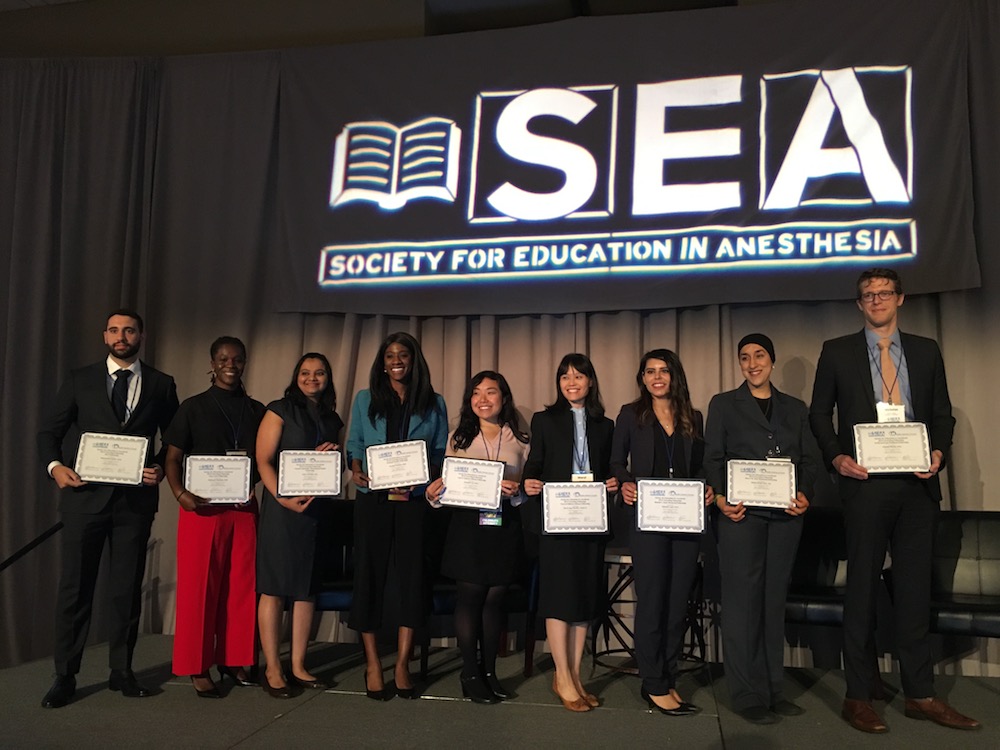 This was another successful year for the SEA/HVO Fellowships. We received 22 applications and awarded 8 Fellowships. See the HVO announcement below. The new Fellows will be traveling to Vietnam, Rwanda or Ghana for their month of teaching anesthesia residents, anesthesia nurses or anesthesia clinical officers. Congratulations to them all.