
How Teamwork Between Army and Civilians Can Make a Difference in Time of Crisis
Category: Newsletter
May
26
|
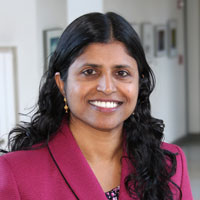
Major Stephanie Parks, DNP, CRNA |
|
Major Stephanie Parks, DNP, CRNA |
|
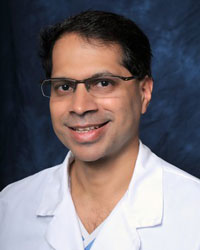
Emuejevoke Chuba, MD |
|
|
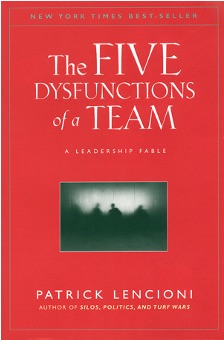 |
Book Review: The Five Dysfunctions of a Team
Book Author: Patrick Lencioni
Publisher: Jossey-Bass, an Imprint of Wiley
Review Author: Herodotos Ellinas
High-performance teams are not the result of sheer luck. During a crisis such as the COVID-19 pandemic, leaders must assemble effective multidisciplinary teams or adapt existing ones. Leaders who assemble such teams should base membership on a careful evaluation of talents, which includes assessing members’ interactions and evaluating their critical thinking when they navigate rapidly changing terrains. Although Lencioni does not discuss an extreme crisis in The Five Dysfunctions of a Team, the reader can extrapolate from the author’s key concepts. Lencioni narrates a fable of an organization that hires a new CEO, Kathryn, to revive a struggling company. The author, in this easy-to-read book, cleverly walks the reader step by step through Kathryn’s challenges in putting together a “high-functioning” team.
An old-school executive hired at a high-tech Silicon Valley company, Kathryn arrives at her first day of work and discovers that her staff of seven talented executives have total inability to work well together. Their constant disagreements and incapacity to take responsibility for their actions impart negativity to the workplace, further contributing to the existing chaos. As an experienced leader, Kathryn quickly realizes the dysfunction of these executives and subjects them to a pair of off-site retreats to identify the underlying issues that led to the company’s current situation. In the process, some of her decisions make her unpopular, but her persistence prevails in creating a high-performance team.
Thirty years ago HIV/AIDS still held thrall of the world.1 I wrote the following as I switched careers from law to medicine:
It was the call I received regarding the HIV positive man whose will I had executed one week earlier which made me reflect on the difference between the power of words and the fight for life. The news of his death recalled the irritation I had felt at trying to get him to meet with me to devise ways to settle an estate of which the greatest asset was the eleven-year-old son he would leave behind alone. The moment that I heard of his death, all of the work, all of the time, all of the trouble was absolutely meaningless...trite.
We look forward seeing you at the SEA 33rd Spring Meeting, which will be held next week at the Hyatt Regency Louisville. To tie into the ACGME’s initiative on wellness, the theme is “Training Professional, Humanistic Anesthesiologists.” This theme is especially relevant to our fast-paced, technologically advanced world which, according to some academic gurus and observers, is experiencing a crisis of humanism and professionalism in the practice of medicine.
The meeting will open with a plenary address by Dr. Thomas J. Nasca, MD, MACP, CEO of the ACGME, professor of medicine at Thomas Jefferson University and senior scholar in the Department of Medical Education at the University of Illinois at Chicago School of Medicine. Several nationally known speakers will address issues relevant to humanism as panel discussion. Friday will conclude with dynamic and interactive workshops that relate to professionalism and humanism. Dr. David Chestnut, MD, Professor and Chief of Obstetric Anesthesiology, Vanderbilt University Medical Center and senior editor of Chestnut’s Obstetric Anesthesia: Principles and Practice will be the plenary speaker for Saturday. The issues relevant to professionalism will be addressed in two TED-style panels discussion followed by additional workshops.
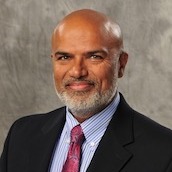
Zulfiqar Ahmed, MD, FAAP
Siromed/Anesthesia Associates of Ann Arbor
Director of Education and Pediatric Anesthesia
Wayne State University Anesthesia Residency Program
St Joseph Mercy Oakland Hospital
Pontiac, MI
|
|
In a recent meeting with the family of a critically ill patient, we deliberated about pursuing an aggressive operation to control the source of sepsis. Because the surgeon was not able to attend the meeting, a resident came in his place; at one point I asked the resident to describe the procedure in question.
To my surprise, the surgical resident described not only the technicalities of the procedure, but also outlined several additional considerations: the likely outcome, the relevant concerns, the alternative options, and how all of the above fit into the patient’s current condition. The resident spoke clearly, included relevant facts, and used language that was readily understandable to the anxious family members. Equally important, the resident’s manner was engaging and compassionate.
I later learned that this particular resident had recently participated in a communication skills training program.1 In this program, small groups used role play to practice and to generate real-time feedback. Residents assessed their own preparedness before and after the session, and they reported high satisfaction and frequent subsequent opportunities for application. In this case, I witnessed these skills used in an actual encounter, in which the resident’s communication guided decision-making and supported the family.
Book Author: David Brooks
Publisher: Random House
|
|
Do you remember your first SEA meeting? For many of us, it was several years ago. There was something special that drew us to be long term SEA members. Perhaps it was a spark ignited through the meeting theme or content. Maybe we met a kindred spirit in education at the dine around. We are interested in how our members became invested in SEA.
|
Karen J. Souter, MB, BS, FRCA, MACM |
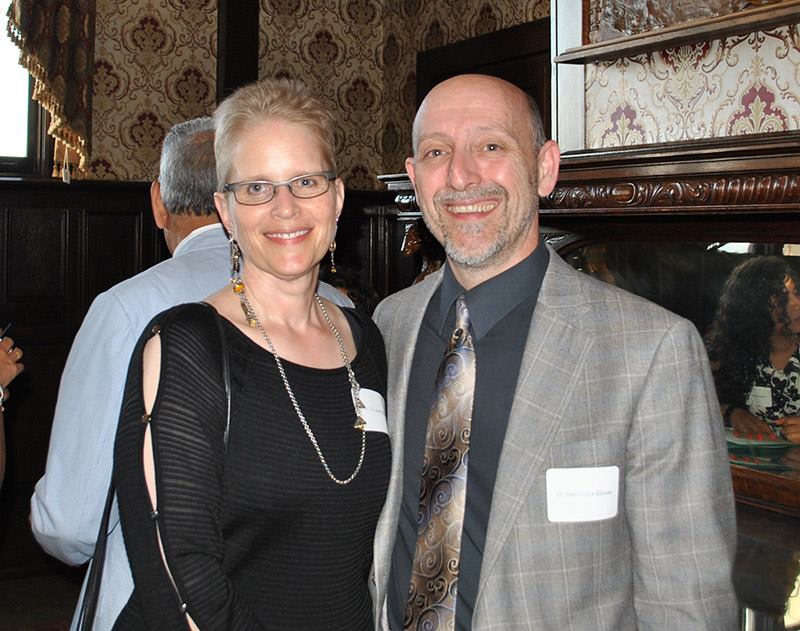 Elizabeth Ellinas, MD and Herodotos Ellinas, MD
Medical College of Wisconsin
We were very pleased to present a program that explored aspects of diversity in the setting of anesthesiology education. The speakers surpassed our expectations, the attendees were supportive of many controversial topic discussions, and of course, Denver is an exciting place to visit.
 |
 |
| Beth Ladlie, MD, MPH | Kristen Vanderhoef, MD |
Good afternoon SEA members and guests! We are excited to welcome you to the sunshine state. We are happy to report that April tends to be a beautiful month in Jacksonville, with average high temperatures reaching nearly 80 degrees and plenty of sunshine. Be sure to pack your beach gear!
I feel fortunate to have grown up in Jacksonville and the surrounding area and can’t wait to share our beautiful city with all of you. I’ve had the pleasure of working at both of our wonderful medical centers, Mayo Clinic Florida and the University of Florida Jacksonville. The medical centers vary greatly, which we have used to our advantage for our anesthesiology residency programs.
In advance of our 33rd Spring Meeting, we are pleased to provide a membership update. The figures in this update are tentative, as they may change before the final count.
We anticipate 198 people to attend the 33rd Spring Meeting in Louisville; this includes 22 residents. Our entire membership roster currently includes 330 members, of whom 56 are either residents or fellows.
|
Kristina Sullivan, MD |
|
Rana K. Latif, MD, FFA |
We would like to cordially invite you to the SEA 33rd Spring Meeting, which will be held at the Hyatt Regency Louisville April 19-22, 2018. To tie into the ACGME’s initiative on wellness, the theme is “Training Professional, Humanistic Anesthesiologists.” This theme is especially relevant to our fast-paced, technologically advanced world which, according to some academic gurus and observers, is experiencing a crisis of humanism and professionalism in the practice of medicine.
The meeting will open with a plenary address by Dr Thomas J. Nasca, MD, MACP, CEO of the ACGME, professor of medicine at Thomas Jefferson University and senior scholar in the Department of Medical Education at the University of Illinois at Chicago School of Medicine. Several nationally known speakers will address issues relevant to humanism as panel discussion. Friday will conclude with dynamic and interactive workshops that relate to professionalism and humanism. Dr David Chestnut, MD, Professor and Chief of Obstetric Anesthesiology, Vanderbilt University Medical Center and senior editor of Chestnut’s Obstetric Anesthesia: Principles and Practice will be the plenary speaker for Saturday. The issues relevant to professionalism will be addressed in two TED-style panels discussion followed by additional workshops.

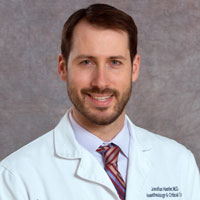 Jonathan Hastie, MD