President's Corner
I think we all like to believe that anesthesiology training has changed by leaps and bounds over the last decades, but truthfully the essential core of our educational paradigm remains the same – the apprenticeship model. Yes, anesthesiology residents spend time learning about quality improvement, doing research, and treating rare complications in high fidelity simulators. But add up all the hours and days of a typical anesthesiology residency and the bulk of that time will be spent with a patient and the attending guiding their care. This relationship creates an environment where the influence of the attending physician can be of outsized importance. And this is true not just with respect to the development of clinical competence but also the modeling of professionalism and communication skills.
One of my favorite people to follow on social media is an ophthalmologist/comedian, Dr. Glaucomflecken. His TikTok videos expertly poke fun at a variety of medical specialty stereotypes, and anesthesiology is no exception. While exaggerated, most stereotypes have a kernel of truth. In Glaucomflecken’s world, the shower-capped anesthesiologist frequently hides behind the blue drapes and avoids meaningful conversation with the surgical team. A recent editorial published in Anesthesiology, “The Accreditation Council for Graduate Medical Education [ACGME] Special Report on Clinical Learners in Procedural Environments: Several Elephants in a Very Small Room,”1 sums up the not-so-funny reality: “Why are trainees communicatively inept? Because their teachers are. They are just mimicking what they see…. Anesthesiology, nursing, and surgery remain siloed communities…frighteningly so!” The potential impact of improved communication on patient safety and outcomes is regarded as self-evident. Closed loop communication, effective handoffs during transitions of care, and creating shared mental models can only serve to improve clinical care.
 decrease burnout and bolster mental wellbeing. Traditionally, interclass friendship and camaraderie vital for the forthcoming clinical years stems organically from frequent social interactions both within and outside the hospital. However, due to infectious concerns, many of those opportunities are not possible this year. With some creativity, we supplemented their curricula with online weekly social hours to facilitate debriefing, decompression, and growth as a class as well as a structured 1:1 peer mentorship program that paired rising CA-1 residents with senior mentors to provide psychosocial support, encourage self-reflection, and bolster professional connectedness.
 high fidelity, was used extensively to educate our medical students. A simulation session that seemed straightforward before the pandemic took substantially more effort because we had to sanitize all the equipment and operate the simulators without the aid of technicians. Finding masks, gloves and sanitizing equipment was challenging. The debriefing skills that I obtained over the years helped to address and humanize medical students’ and residents’ concerns about COVID-19 and the effects on their education.
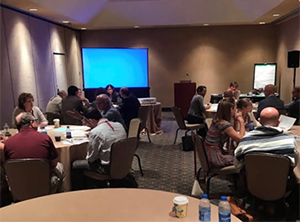
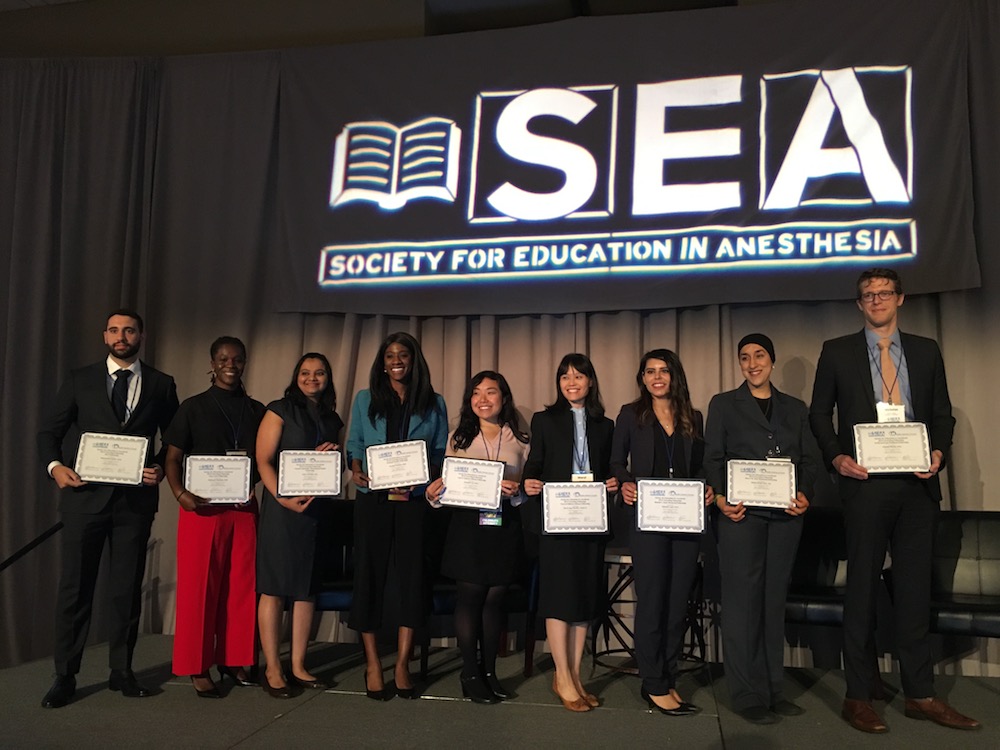 This was another successful year for the SEA/HVO Fellowships. We received 22 applications and awarded 8 Fellowships. See the HVO announcement below. The new Fellows will be traveling to Vietnam, Rwanda or Ghana for their month of teaching anesthesia residents, anesthesia nurses or anesthesia clinical officers. Congratulations to them all.